City guide · 7 min read
How to Explore Hyderabad Like a Local
Hyderabad opens up to people who learn its rhythm: early lakes, mid-morning Irani chai, markets at the right hour and food that stays close to home. A guide to seeing the city the way residents do.
Visitors see Hyderabad in a straight line: Charminar, Golconda, a plate of biryani, the airport. People who live here see it in loops. The same Irani café on a Sunday morning, the same lake at dusk, the same market lane for a particular kind of bangle or spice. Exploring the city like a local is less about finding secret places than about learning when and how to visit the ones in plain sight.
This guide is about that rhythm, and about the small, unwritten rules that make Hyderabad open up.
Start with the city's daily rhythm
Hyderabad runs on a clear daily pattern, and fitting into it changes almost everything.
- Early morning: the parks and lakes fill with walkers. KBR Park, Necklace Road and the lakes on the western side are at their best before the heat. Tiffin centres open early for idli, dosa and upma.
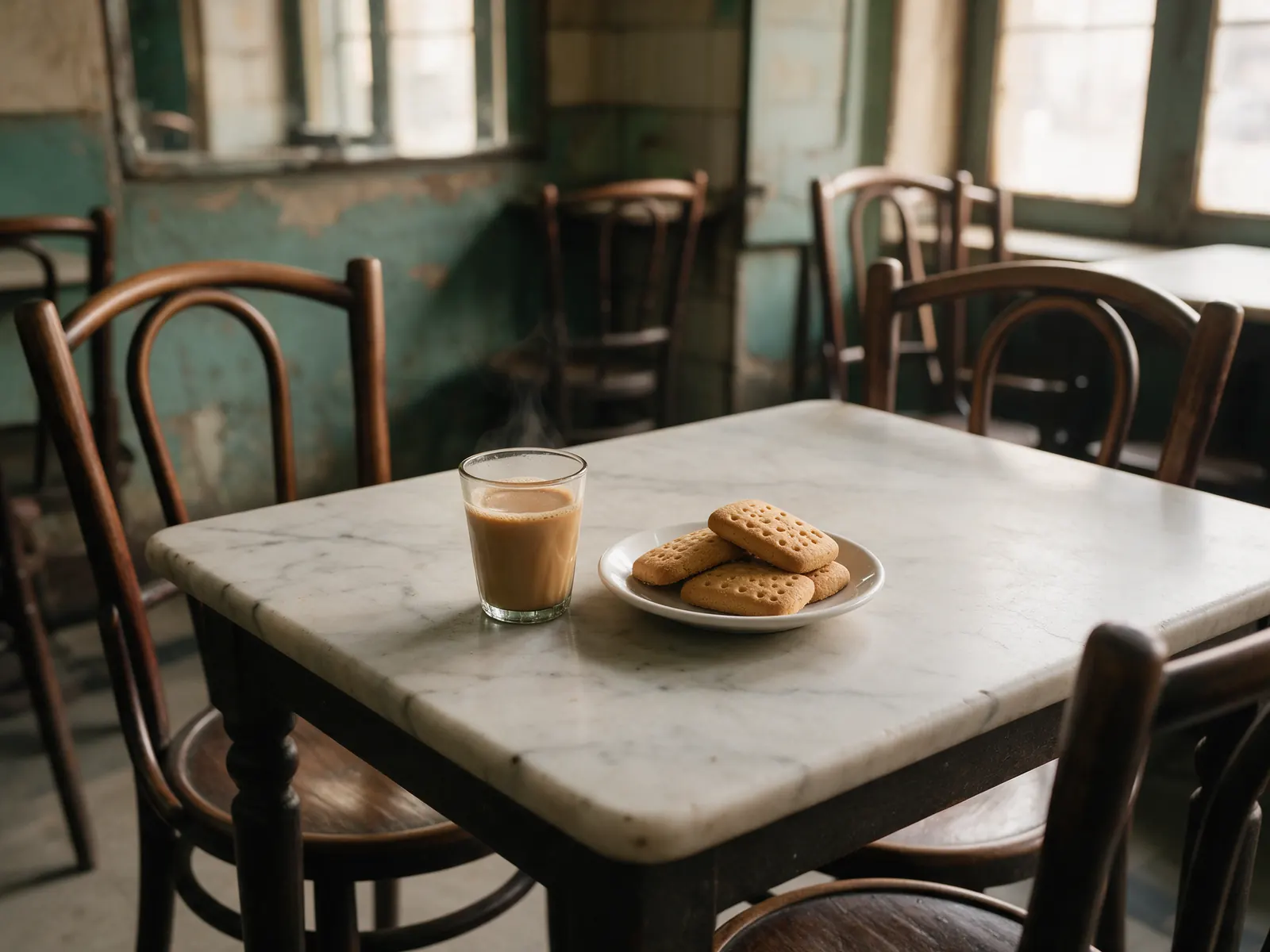
- Mid-morning: the Irani cafés settle into their stride. Chai, Osmania biscuits, a newspaper and slow conversation.
- Afternoon: the heat slows things down. Museums, palaces and long lunches make sense now.
- Evening: the city comes back outdoors. Families walk along Hussain Sagar, the lanes near Charminar brighten, and Durgam Cheruvu gathers people after work.
- Late night: during Ramzan especially, the Old City stays awake long past midnight, with haleem and sweets carrying the evening.
If you only change one habit, make it this: do the outdoor things early or late, and the indoor things in between.
The Irani café, properly
Irani cafés are where Hyderabad sits down. Opened by families who came from Iran generations ago, they remain some of the city's most democratic rooms, with students, retirees, shopkeepers and office workers at neighbouring tables.
The local order is simple. A glass of Irani chai, strong and creamy, and a plate of Osmania biscuits to dip. Bun maska or a savoury lukhmi if you are hungry. Nobody expects you to leave quickly, so do not rush yourself. The point is to sit. For a fuller picture, see our guide to coffee and chai across Hyderabad.
Treat each neighbourhood as its own city
Hyderabad is several cities sharing a name. Moving between them is part of the pleasure.
- The Old City: Charminar, Laad Bazaar, Chowmahalla Palace and lanes that have been trading for centuries. Dense, loud, historic and best on foot.
- Abids and Nampally: the older centre, with mid-century shopfronts, long-standing institutions and the Sunday book market.
- Secunderabad: the twin city, with its own markets, churches and cantonment history.
- Banjara Hills and Jubilee Hills: leafy roads, independent kitchens, galleries and KBR Park.
- HITEC City, Gachibowli and Kondapur: the newer west, built around work, with lakes like Durgam Cheruvu and a busy weekend café scene.
Choose one area per outing. Crossing the city twice in a day mostly means seeing traffic. Our neighbourhood pages describe each one in more detail.
Markets: where the city trades and talks
The markets are where local knowledge matters most, and where it shows.
Laad Bazaar
Running off Charminar, Laad Bazaar is the city's bangle street. Lac bangles set with stones and glass in every colour, alongside bridal wear, perfume and attar. Go in the morning for space, or in the evening for atmosphere.
Begum Bazaar
One of the city's largest wholesale markets, Begum Bazaar is where much of Hyderabad buys its spices, dry fruits, utensils and household goods in quantity. It is busy, practical and fascinating to walk through, even if you leave with only a small bag of cardamom.
The Abids Sunday book market
On Sunday mornings, the pavements of Abids fill with secondhand books: textbooks, classics, paperbacks and old magazines. Arrive early, browse slowly and expect to leave with more than you planned.
For more on how to approach the city's markets, see shopping in Hyderabad with a local.
Eating by area
Locals rarely cross the city for a single dish when their own area does it well. A few loose associations:
- Around Charminar: Irani chai, haleem in Ramzan, kebabs, sweets and the classic Hyderabadi table.
- The older centre: long-standing biryani houses, Irani cafés and simple tiffin counters.
- Banjara and Jubilee Hills: regional Indian kitchens, modern restaurants and slow coffee.
- The western suburbs: food from every part of India, reflecting the people who moved here for work, alongside plenty of Telangana and Andhra meals.
Wherever you are, look for the busiest counter, order what the people around you are eating, and share. Our food guide for first-timers covers the dishes in more detail.
What locals know that visitors do not
- Timing beats planning. The same place can be calm or overwhelming depending on the hour. Ask when a place is best rather than whether it is good.
- Order like a regular. At an Irani café, chai and biscuits. At a biryani house, one portion to share before ordering more. At a tiffin centre, whatever is coming out fresh.
- Bargain politely. In markets like Laad Bazaar and the street stalls around it, a gentle counter-offer is expected. In fixed-price shops, it is not. Smile, be fair, and walk on gracefully if the price does not suit you.
- Carry a few small notes. Digital payments are widely accepted, even at small stalls, but a little cash still helps.
- Watch the calendar. Ramzan, Bonalu, Bathukamma, Navratri and Diwali all change the city's mood and its streets. Some of the best evenings of the year happen around them.
- Check opening days. Several museums and palaces close one day a week.
Hidden Hyderabad is mostly about attention
People search for hidden Hyderabad expecting secret places. Usually what they find are quieter versions of familiar ones. The lanes behind Charminar in the early morning, before the shutters go up. Golconda Fort on a weekday afternoon, when the walls are nearly empty. The tombs and stepwells of the Qutb Shahi Heritage Park, a short drive from the fort and far calmer. Necklace Road at sunrise rather than sunset.
The city does not hide much. It simply rewards people who come back, slow down and look.
When a Local Partner helps
Some of what a local knows can be written down. Much of it cannot: which lane to turn into, what a vendor means by a particular price, why a café that looks ordinary has been full every morning for decades. That knowledge travels best in person.
Meezoy lets you book a verified Local Partner in Hyderabad by the hour for a real activity: Coffee, Food or Shopping, with seasonal activities like Garba. Every Local Partner goes through ID verification and review, and every experience takes place at a Meezoy Verified Spot, which is always a public place. Payments and chat stay in the app.
It suits the moments when you want more than a map: a first visit to Laad Bazaar with someone who knows how bargaining works, a morning of chai in a neighbourhood you have never explored, or a lunch where someone can explain what is arriving at the table. On Coffee bookings, you cover one basic beverage for your Local Partner, up to ₹300. On Food bookings, each person pays for their own by default. On Shopping, you pay only for your own shopping. The activity is the whole booking, and it stays that way. You can read more about how Meezoy approaches safety.
Live in it, a little at a time
You cannot see a city like this all at once, and Hyderabad would not thank you for trying. Pick a neighbourhood, a market and a café, and visit each more than once. By the third visit you will be ordering without looking at the menu, and somebody will probably nod hello.
Meezoy is now in Hyderabad.
Now in Hyderabad.
Coffee, food and shopping with verified Local Partners.