Coffee · 6 min read
Coffee in Hyderabad: A Neighbourhood-by-Neighbourhood Guide
From Irani chai and Osmania biscuits in the Old City to pour-overs in Jubilee Hills, a slow walk through the way Hyderabad drinks, area by area.
Ask someone in Hyderabad where to find a good cup and the answer depends on where you are standing. In the Old City it will be a glass of Irani chai and a plate of Osmania biscuits. In Jubilee Hills it might be a pour-over made with beans grown a few hundred kilometres away. In HITEC City it will probably be whatever is closest to the next meeting. The city does not have one coffee culture. It has several, layered over each other by neighbourhood and by decade.
This guide moves through them roughly in the order they arrived, from the Irani café to the specialty bar. It is less a list of places than a way of reading them.
Where it starts: the Irani café
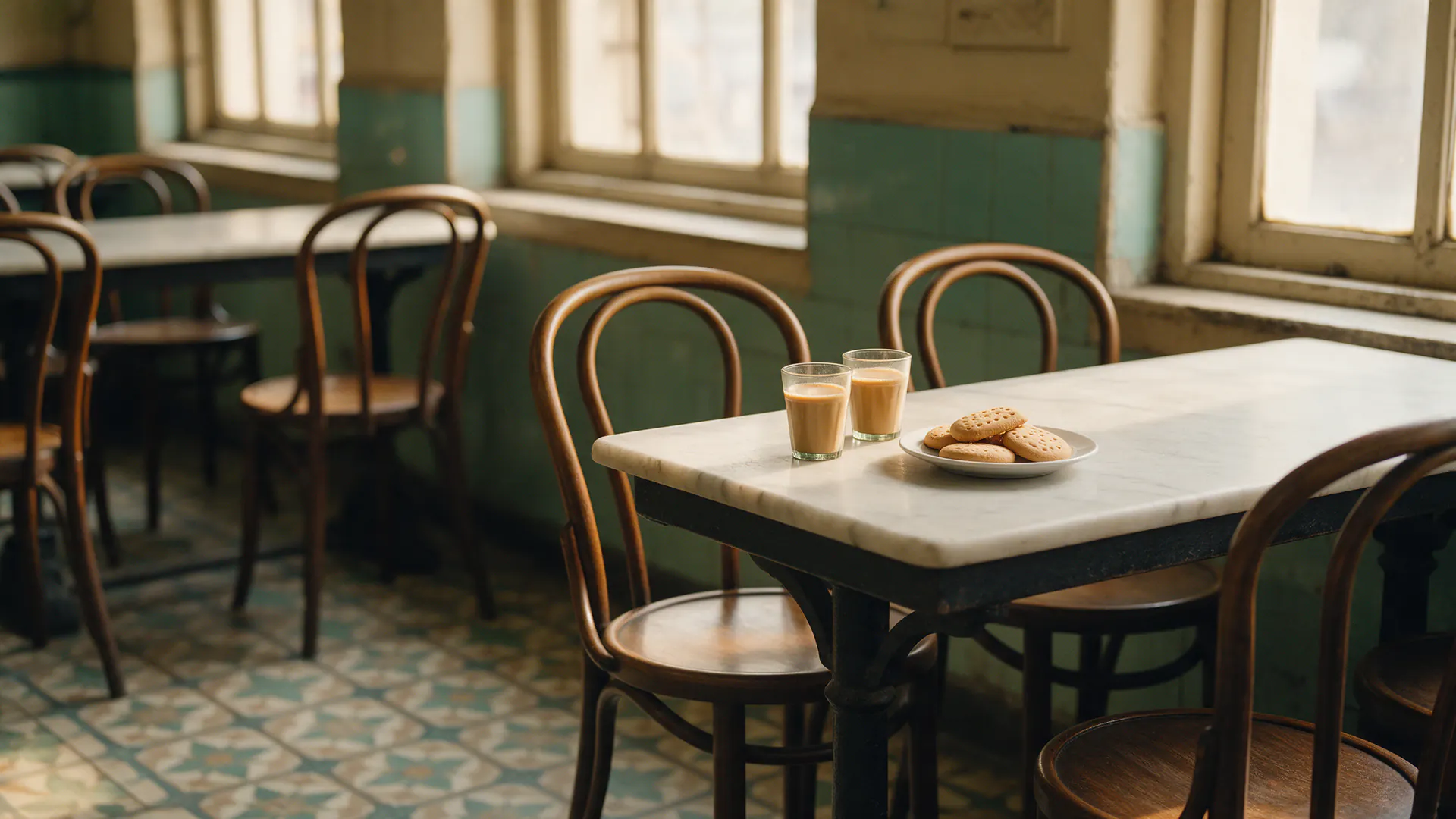
Hyderabad's café culture began with tea. Irani cafés, opened by families who came to the city from Iran, have been part of daily life here for generations. They are easy to recognise: high ceilings, marble or laminate tabletops, bentwood chairs, a counter lined with glass jars, and a steady turnover of people who came in for ten minutes and stayed for forty.
The order rarely changes. Irani chai is brewed strong and finished with rich, thickened milk, so it arrives sweet, creamy and deeper in flavour than the tea most people make at home. Beside it sits a plate of Osmania biscuits, soft and faintly salty, faintly sweet, named after the last Nizam, Mir Osman Ali Khan. Most people dip. Nobody minds.
Many Irani cafés also serve bun maska, a soft bun split and buttered, and lukhmi, a square savoury pastry that is very much a Hyderabadi thing. But the menu is not really the point. The pace is. An Irani café is where the city slows down, reads the paper and talks about cricket.
- How to order: one chai, one plate of biscuits, and watch how the table fills around you.
- When to go: mornings and late afternoons tend to carry the most character.
- Where to look: the lanes around Charminar, and the older commercial streets of Abids and Nampally.
The Old City: tea with history in the room
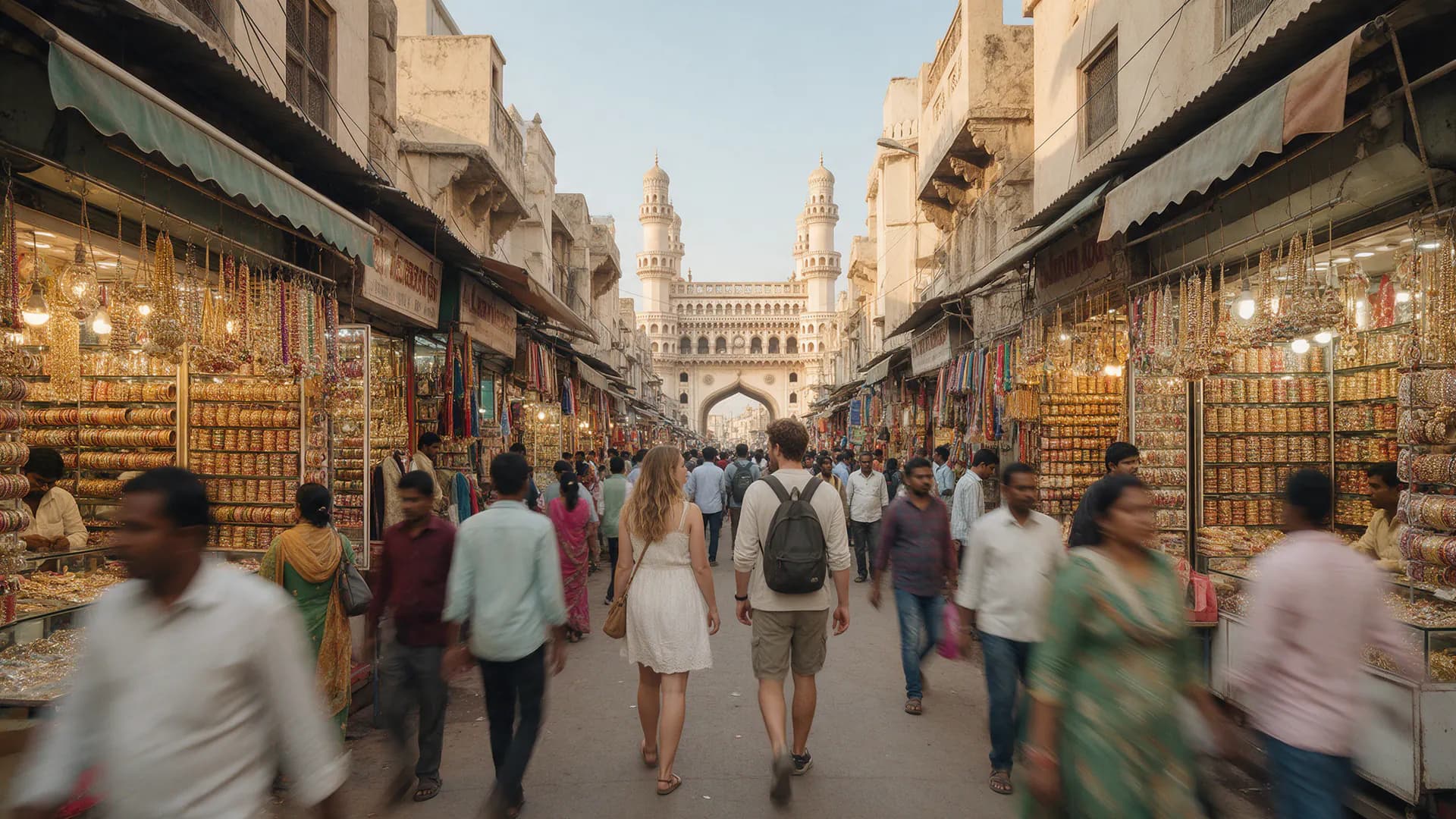
Around Charminar, tea is part of the street itself. Glasses move between counters and shopfronts, and conversations start and stop without ceremony. This is the part of Hyderabad where a cup is rarely the destination. It is the pause between a walk through Laad Bazaar and the next errand, or the reason to sit down after the climb through crowded lanes.
During Ramzan the evenings here change entirely, with the streets busy late into the night. Even outside that month, the Old City rewards anyone willing to sit still for a while and let the neighbourhood go past.
Abids and the older centre
Abids is one of the city's older commercial districts, and it still carries some of that mid-century feeling: wide shopfronts, old signage, and cafés where the furniture has outlasted several owners. On Sundays the area is known for its street book market, which makes it one of the best places in the city to pair a cup with a secondhand paperback.
The cafés here are not trying to impress anyone. That is their appeal. The tea is consistent, the biscuits are fresh, and the people at the next table have often been coming for years.
Himayatnagar: the everyday cup
Himayatnagar is a busy shopping and residential neighbourhood, and its cafés reflect that. This is where you are as likely to find South Indian filter coffee, poured between a steel tumbler and a small bowl to cool it and lift the froth, as you are to find an espresso machine. It is coffee for people with somewhere to be, but not in a rush to get there.
It is also a useful reminder that coffee in South India has a long history of its own. Filter coffee, made with chicory-blended grounds and boiled milk, is decades older than the specialty wave and remains the default in many homes.
Banjara Hills and Jubilee Hills: the slow cup
Specialty coffee found its footing in Banjara Hills and Jubilee Hills. These neighbourhoods have the leafy roads, the independent kitchens and the patient customers that a slow coffee bar needs. Here you will find pour-overs, cold brew, carefully pulled espresso and menus that name the estate a bean came from.
Much of that coffee is grown in India. The hills of Karnataka, Kerala and Tamil Nadu, and the Araku Valley in neighbouring Andhra Pradesh, supply beans that many Hyderabad cafés now roast and brew with real care. Ask the person behind the counter where this week's beans are from. In good places, they will be glad you asked.
- Look for: a short menu, a visible grinder, and staff who talk about the coffee before the cake.
- Try: the same bean as espresso and as a pour-over, side by side. It is the quickest way to understand what a roaster is doing.
Gachibowli, HITEC City and Kondapur: coffee at the pace of work
On the western side of the city, coffee keeps office hours. The cafés of Gachibowli, HITEC City and Kondapur are built around laptops, quick catch-ups and the long afternoon between calls. They are bright, efficient and often very good.
The trick here is timing. On weekday afternoons these places belong to work. On weekend mornings they loosen up considerably, and that is when they are most worth a visit if you want to sit and talk rather than type.
How to read a Hyderabad café
Wherever you go, a few small signals tell you most of what you need to know:
- Who is at the tables. Regulars in the morning are a better sign than a full room at noon.
- What is on the counter. Fresh biscuits in the jars, or freshly roasted bags on the shelf, say the same thing in two accents.
- How long people stay. The best cafés in this city are the ones people seem reluctant to leave.
- What the staff recommend. Ask for their favourite rather than the bestseller.
What changes when you go with someone who knows the area
A guidebook can tell you which neighbourhood to visit. It cannot tell you which table catches the afternoon light, which order the regulars actually place, or why a particular café still matters to the people who grew up around it. That kind of knowledge lives with people.
A Coffee experience on Meezoy pairs you with a verified Local Partner who knows the area, approved specifically for Coffee. You book by the hour, and the experience always takes place at a public Meezoy Verified Spot. You cover one basic beverage for your Local Partner, up to ₹300, and pay for your own order as usual. Payments and conversations stay in the Meezoy app, and both of you rate the experience afterwards.
What you get is not a tour. It is an hour at a table with someone who can tell you what you are looking at. If you are new to the city, our Hyderabad page is a good place to begin.
A city that drinks in layers
Spend a week moving between these neighbourhoods and a pattern appears. The Irani café, the filter coffee counter and the specialty bar are not replacing one another. They sit side by side, each serving its own hour of the same day. Hyderabad has never needed to choose between its old cup and its new one, and the people who know it best tend to drink both.
Meezoy is now in Hyderabad.
Now in Hyderabad.
Coffee, food and shopping with verified Local Partners.